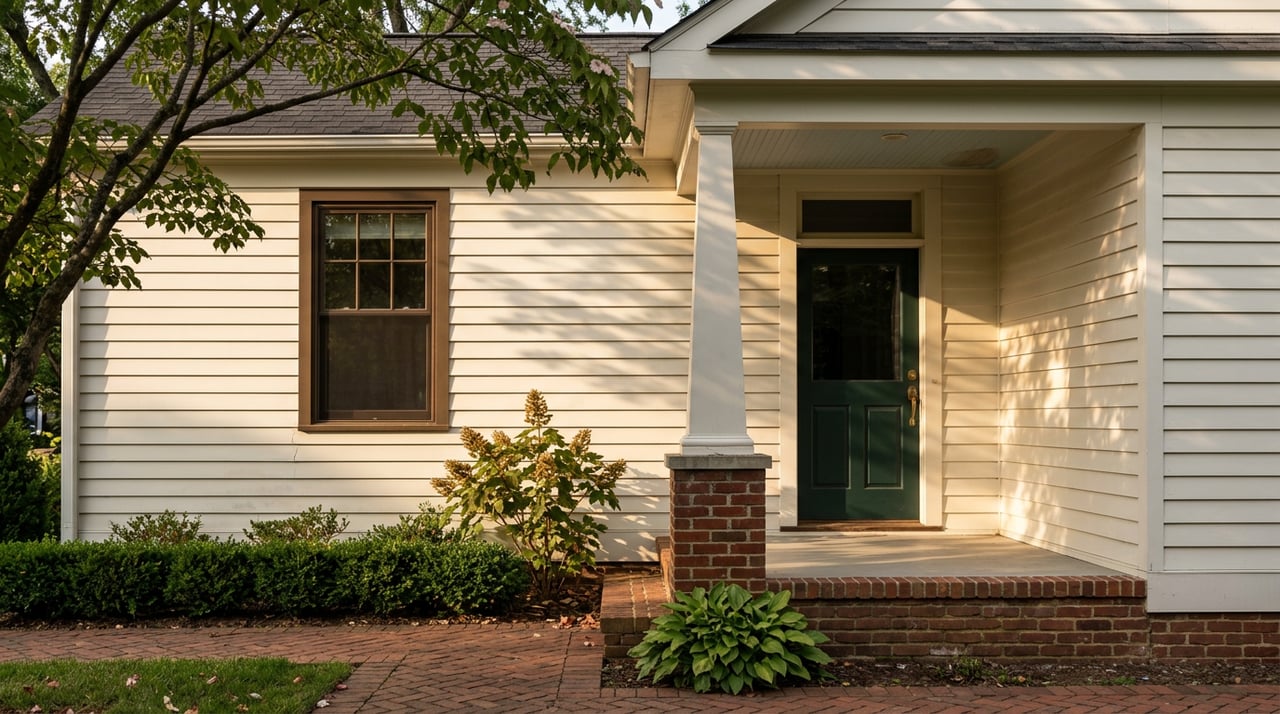
A house on South Main Street lists for $999,000. A newer build two miles away, outside the village core, lists for $1.17 million. On paper, the cheaper house should move faster. In Cranbury, it usually doesn't.
As of June 2026, homes across the township carried a median list price of $1.17 million and typically sold within 49 days, according to listing data tracked that month. Narrow the lens to just the township's vintage and historic-era inventory, and the number that jumps out isn't price. It's time. Those older Main Street and village-core listings were taking a median of 71 days to sell, more than three weeks longer than the market as a whole. Lower price, slower sale. This difference is worth considering alongside the approval process buyers may encounter.
How Historic-Preservation Review Can Affect Renovation Plans
Cranbury's entire downtown, most of Main Street and the streets that feed into it, was added to the National Register of Historic Places in 1980 as District #80002502. According to the township code, any exterior change to a property inside the Cranbury Village Historic District, or within 200 feet of certain individually designated historic sites, has to clear the township's Historic Preservation Commission before a building permit gets issued. Not a courtesy review. A required one.
That process, called a Certificate of Approval, is one part of the renovation timeline buyers may want to understand. Buyers touring a 1900s foursquare on North Main Street are pricing in more than a home inspection. They're pricing in a permitting layer that a buyer looking at a 2015 colonial off Route 130 never has to think about.
What Triggers a Certificate of Approval, and What Doesn't
The rule is narrower than most people assume, but it covers more than most people expect. A Certificate of Approval is required before you can start:
- Demolishing or relocating any building or structure
- Changing the exterior appearance of a building through an addition, reconstruction, alteration, or repair that goes beyond ordinary maintenance
- Adding to or newly constructing a principal or accessory building
- Installing or changing exterior signs or exterior lighting
It is not required for changes to a building's interior. Painting also falls outside the requirement, with one catch: if the work involves repairing or replacing deteriorated building elements, such as rotted trim or damaged siding, township staff may determine that approval is needed after all. The line between "repaint" and "repair" is exactly the kind of judgment call that trips up a buyer who assumed a fresh coat of paint was a weekend project.
How the Commission's Review Schedule Works
Here's how the review schedule can affect a renovation timeline. According to the township's Historic Preservation Commission FAQ, the Historic Preservation Commission meets only on the first and third Tuesday of each month. A completed Certificate of Approval application has to be submitted at least 10 days before a scheduled meeting to make that meeting's agenda. If your paperwork lands after that window, you wait for the next one.
Once an application is deemed complete, the Commission has 45 days to approve or deny it. If it doesn't act within that window, the approval becomes automatic. That sounds like a safety net for applicants, and it is, but 45 days is still 45 days. There's no fee to file, which helps, but the calendar math is unforgiving if your closing date assumed a quick contractor start.
Two meetings a month. A 10-day submission deadline. Up to 45 days for a decision. Those are key parts of the timeline for an application inside the district.
For a buyer planning to close, then immediately re-roof or add a mudroom before move-in, that clock can eat a month or more before a permit is even in hand. That's not a dealbreaker. It's a variable that belongs in the offer, not a surprise that shows up after closing.
Why the Design Rules Go Further Than Paint Colors
The Commission isn't reviewing taste. It's reviewing conformity to written design standards, and those standards get specific. The township code limits new construction within the district to a building width no more than 2.5 times its height, a rule meant to keep new structures in proportion with the narrow-front, deep-lot buildings that have lined Main Street since the 18th and 19th centuries. Additions have to reflect what the ordinance calls the "directional expression" of the original structure, meaning the footprint and roofline of an addition need to read as an extension of the house, not a competing shape bolted onto it. Roof shapes, materials, and anything visible from the street are all part of what gets reviewed.
This isn't bureaucratic overreach dropped on the village at random. Cranbury's downtown grew up around a gristmill built in 1737, and the street grid, lot widths, and building placement you see walking Main Street today trace back to that original settlement pattern. The historic district ordinance exists to keep that pattern legible. It also means a buyer who wants to significantly reshape a historic structure, rather than restore or gently update it, may be fighting the ordinance's intent from day one.
What This Means If You're Already Under Contract
If you're looking at a property inside the district, or within that 200-foot buffer of a designated landmark, a few questions belong in your due diligence right alongside the inspection:
- Ask the seller directly whether any exterior work was done without a Certificate of Approval. Unpermitted alterations inside a historic district can complicate future approvals, since the Commission reviews the property's current condition against the design guidelines, not just your proposed change.
- Confirm your parcel's exact status. Being near the village doesn't automatically mean you're inside the mapped district or buffer zone. A quick check with the township's zoning office settles this before you write renovation plans around an assumption.
- If your purchase depends on doing exterior work before or shortly after move-in, build the 45-day review window into your timeline now, not after you're already carrying two mortgage payments.
- Separate cosmetic plans from structural ones early. Interior renovations move at a normal contractor's pace. Anything visible from the street needs the Commission's sign-off first.
None of this makes a historic Cranbury property a worse buy. It makes it a different kind of buy, one where the renovation math has an extra input that a newer-construction purchase in West Windsor or Plainsboro simply doesn't carry. Buyers who plan for that input can consider it in their purchase timeline. Buyers who discover it mid-contract may need to revisit their plans.
If you're comparing a historic district property against something newer elsewhere in town, our Cranbury neighborhood guide breaks down more of what distinguishes the village core from the surrounding township, and our buyer's guide walks through the broader due diligence steps worth taking before you write an offer anywhere in Mercer or Middlesex County.
A Few Questions Worth Asking Before You Tour
Does painting my house require a Certificate of Approval? Generally, no. The Commission does not require an application for painting alone. If the work involves repairing or replacing deteriorated elements, such as rotted wood trim, that repair portion may need approval even if the paint job itself wouldn't.
What happens if the Commission doesn't act within 45 days? Your application is automatically approved without conditions. It's a built-in protection against indefinite delay, though it still assumes you filed a complete application in time for a scheduled meeting.
I'm not on Main Street. Could I still be affected? Possibly. The historic buffer extends 200 feet from designated historic buildings, landmarks, or sites outside the mapped district. A property just off Main Street or near an individually designated home elsewhere in the township could still fall under review for exterior work.
Buying inside Cranbury's historic core means buying into one of the more intact 18th and 19th century village cores in central New Jersey, and that's worth something the median price per square foot can't capture. It also means buyers planning exterior renovations may need to account for the Commission's meeting schedule, submission deadline, and review period. Check those requirements before making plans around a particular move-in date.
If you're weighing a historic Cranbury property against new construction, or you just want someone who can read a zoning map before you fall in love with a Main Street porch, Randy & Geniene — Premier Properties can walk the details with you. Schedule Your Complimentary Home Consultation and we'll help you figure out exactly what you're buying, clock included.
This article is general information, not legal, tax or financial advice. Consult a qualified professional about your situation.